
There’s a common fear in the gym: “If I do cardio, I’ll lose my muscle.” We looked at a 2022 meta-analysis that pooled 43 studies on adding cardio to strength training.
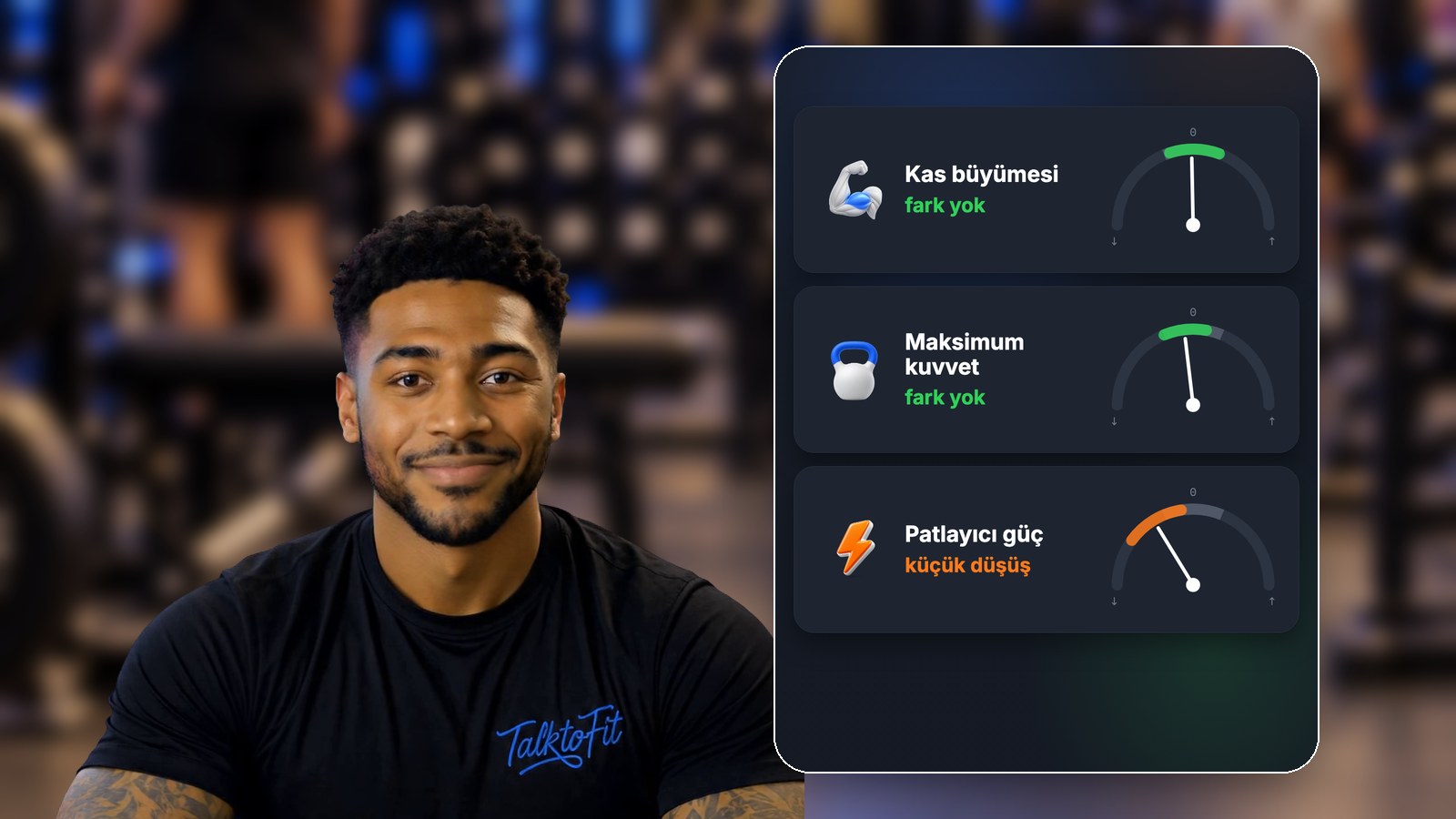
In short: Cardio alongside strength training did not reduce muscle growth or maximal strength. There was a small drop in explosive power, and it showed up when both were done in the same session.
What did the study do?
- Study
- Schumann et al., Sports Medicine, 2022
- Type
- Systematic review and meta-analysis of controlled studies
- Scope
- 43 studies, 1,090 healthy adults
- Program
- At least 4 weeks of supervised training
In each study one group did strength training only (500 people), and the other did the same strength program plus cardio such as running or cycling (590 people). The researchers compared muscle growth, maximal strength and explosive power (fast force, like jumping).
What did it find?
| Outcome | With cardio added |
|---|---|
| Muscle growth | No difference |
| Maximal strength | No difference |
| Explosive power | Small drop |
The drop in explosive power was clear when cardio and strength were done in the same session (no more than 20 minutes apart); with at least 3 hours between them, no significant drop was seen. The results appeared independent of the type of cardio (running or cycling), weekly frequency, training status and age.
What it means in practice
You don’t need to drop cardio to build muscle or strength. If explosive power — jumping, sprinting — matters to you, consider doing cardio and strength a few hours apart rather than in the same session.
Good to know
- The drop in explosive power was small and mostly appeared when both were done in the same session.
- The muscle growth analysis rested on 15 studies (389 people).
Source
- Schumann M, Feuerbacher JF, Sünkeler M, et al. (2022). Compatibility of Concurrent Aerobic and Strength Training for Skeletal Muscle Size and Function: An Updated Systematic Review and Meta-Analysis. Sports Medicine 52:601–612. doi:10.1007/s40279-021-01587-7 · PubMed · Full text (PMC)
This article is for information only and is not medical advice. Talk to your doctor about decisions that concern your health.